
Top AI Infrastructure & GPU Cloud Platforms for 2026: Why Many AI Teams Are Choosing the Wrong Stack – and How to Choose Again
Introduction
By the end of 2025, if we pause and look back carefully, one thing becomes very clear:
many AI teams did not struggle because their models were weak.
They were not short on GPUs either. In fact, many had access to very powerful hardware.
The problem was somewhere else. It was in how the AI infrastructure was chosen.

A lot of teams began their AI journey on familiar cloud platforms, with the reassuring feeling that everything was already set up properly. Early experiments went smoothly, models ran as expected, and the first results looked promising.
Then the costs started to rise. Slowly. Steadily. Almost unnoticed.
At that point, the real question was no longer “Which GPU is more powerful?”
It became: “Which AI infrastructure allows us to move forward without being trapped by GPU costs?”
👉 If you are still at the stage of exploring the AI infrastructure landscape, or if you want a broad comparison of today’s most popular GPU cloud platforms, you may want to read our earlier overview: Top AI Infrastructure & GPU Cloud Platforms 2025 – Performance, Pricing & Scalability Compared
That article provides the foundation. This one goes deeper into the real-world lessons that emerged afterward.
This article is not another tool list.
Instead, we will revisit the most common mistakes AI teams made when choosing infrastructure, what changed toward the end of 2025, and how to rethink your decision for 2026 in a more deliberate way.
GPU Cloud in 2025–2026: The Problem Is No Longer GPU Scarcity
A few years ago, GPUs were scarce.
Today, GPUs are available — but the right GPUs, used in the right way, are not always easy to find.
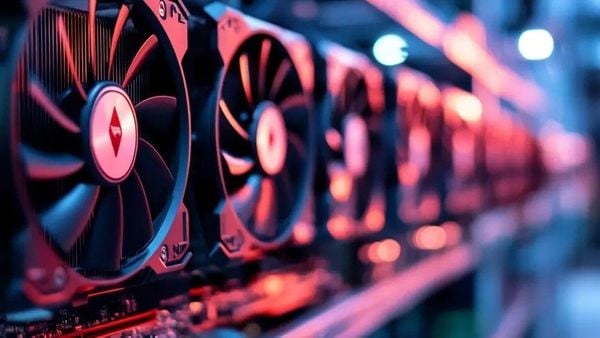
Toward the end of 2025, many AI teams realized that the real issue was not access to GPUs, but using GPUs that did not match how their AI workloads actually behaved.
Several shifts became increasingly obvious:
Powerful GPUs are always available, but not every workload requires top-tier hardware, and overprovisioning often inflates costs without delivering proportional value.
Hourly GPU pricing is no longer the only number that matters; long-term operational costs, including idle time, are what truly determine sustainability.
Many teams eventually recognized that the problem was not expensive GPUs, but paying for GPUs that did not consistently generate value.
Instead of asking how powerful a GPU is,
we need to ask: does this GPU align with the lifecycle of our AI system?
Common Mistakes When Choosing AI Infrastructure
Most infrastructure decisions are made with good intentions. Still, in 2025, several recurring mistakes appeared across teams of all sizes.
Choosing large cloud providers “for peace of mind,” then getting locked into rising costs.
At first, the setup feels reasonable. Over time, however, paying for GPUs that run continuously — even when underutilized — slowly drains the budget.Renting more powerful GPUs than the workload actually requires.
Many inference and fine-tuning tasks perform well on mid-range GPUs, yet teams often default to premium hardware simply to avoid perceived risk.Running inference 24/7 despite uneven traffic patterns.
This approach ensures availability, but it is also one of the fastest ways to accumulate unnecessary GPU expenses.Ignoring hidden costs that do not appear immediately.
Idle GPUs, data egress, storage, and networking charges accumulate quietly and only become visible after budgets have already been exceeded.Choosing platforms based on familiarity rather than suitability.
A well-known name does not automatically mean a platform fits your AI workflow.
These mistakes rarely cause immediate failure. Instead, they surface gradually — through rising costs and shrinking flexibility.
How to Choose the Right AI Infrastructure for 2026
As we move into 2026, the question is no longer “Which platform is the best?”
The more relevant question is: which platform fits how you actually use AI, day by day?
To answer that, we need to examine a few core factors.
Is your primary workload training or inference?
For short, batch-style training, flexibility and pricing efficiency often matter more than strict uptime. For long-running inference, cost predictability and stability become critical.Are GPU usage patterns continuous or intermittent?
Many inference systems experience spikes at certain times but remain idle otherwise. In such cases, on-demand or serverless GPU models can significantly reduce waste.How much downtime can you tolerate?
Downtime may be acceptable during experimentation, but it becomes a hard constraint in production systems.How strong is your technical team?
Experienced teams can manage more complex infrastructure. Smaller teams usually benefit from platforms that reduce operational overhead.Is your budget fixed or flexible?
Fixed budgets require tight cost control. Flexible budgets allow performance optimization, but only with clear boundaries.
There is no universal answer. Only answers that fit specific stages.
Reviewing the Main Platforms Through a “Fit” Lens
RunPod – When Speed and Flexibility Matter
RunPod is often chosen by teams that need fast deployment and cost control without heavy infrastructure complexity.
A good fit for inference, demos, and MVPs run by small teams.
Less suitable when strict enterprise SLAs or guaranteed uptime are required.
Many teams view RunPod as a way out once large cloud bills start escalating.

Vast.ai – When Cost Is the Top Priority
Vast.ai offers access to GPUs at very competitive prices, with higher operational risk.
Well suited for training and fine-tuning when cost optimization outweighs stability concerns.
Not ideal for teams that need consistent uptime or minimal infrastructure risk.
With Vast.ai, understanding what you are renting is essential.

DigitalOcean (Paperspace) – When Simplicity Comes First
DigitalOcean appeals to smaller teams that value ease of use over extreme optimization.
Suitable when you want a straightforward deployment experience.
Less suitable for large-scale workloads or highly price-sensitive GPU usage.

(https://www.digitalocean.com/)
Lambda – When AI Is the Core Focus
Lambda is designed specifically for AI-heavy workloads.
Well suited for intensive training and experienced AI teams.
Less suitable when budgets are tight or inference needs are lightweight.

(https://lambda.ai/)
CoreWeave – When Production and SLAs Are Critical
CoreWeave targets production-grade AI systems where reliability is paramount.
A strong fit for mature AI products and enterprise environments.
Not ideal for early-stage projects or cost-minimization goals.

(https://www.coreweave.com/)
Other Noteworthy Platforms, Viewed Strategically
Beyond the familiar names, the GPU cloud ecosystem expanded in meaningful ways toward the end of 2025. When grouped by strategy rather than brand, the landscape becomes clearer.
Hyperscalers such as AWS, Azure, and Google Cloud remain strong choices for global scale, compliance, and enterprise integration, though flexibility and cost control require careful planning.
Developer-friendly GPU clouds, including Vultr Cloud GPU, focus on fast deployment, low latency, and streamlined infrastructure, making them attractive for inference-heavy services.
Production- and workflow-oriented platforms, such as Northflank, go beyond GPU access by offering CI/CD, autoscaling, observability, and Bring Your Own Cloud models for structured AI deployment.
Cost-optimized and flexible providers, including Thunder Compute and GPU marketplaces, suit teams prioritizing price efficiency while accepting trade-offs in stability or enterprise features.
This strategic view helps us choose platforms based on real needs rather than name recognition.
Comparing Platforms by Usage Strategy
From a broader perspective:
Individuals and early-stage startups often benefit most from GPU marketplaces and on-demand models.
Growing startups typically combine stable inference infrastructure with flexible training environments.
Enterprises increasingly adopt hybrid strategies, mixing hyperscalers with specialized GPU providers.
There is no single correct choice.
Only choices that fit each phase.
AI Infrastructure in 2026: What Will Remain
Large cloud providers are not disappearing. Neither are GPU marketplaces.
The clearest trends moving forward include:
Growing adoption of hybrid AI infrastructure
Wider use of serverless GPU models for inference
Paying for actual value delivered, not just uptime
AI infrastructure is no longer just a technical decision. It is a strategic one.
Conclusion
Choosing AI infrastructure is not about finding the most powerful GPU.
It is about choosing a platform that allows you to stop worrying about GPUs altogether.
When infrastructure fades into the background, you gain the space to focus on what truly matters: your AI itself.
(Some links on our site may be affiliate, meaning we may earn a small commission at no extra cost to you.)
Subscribe now !
Be the first to explore smart tech ideas, AI trends, and practical tools – all sent straight to your inbox from IkigaiTeck Hub
IkigaiTeck.io is an independent tech publication sharing practical insights on AI, automation, and digital tools.